10 Small Home Office Ideas for Making the Most of Your Space10 Small Home Office Ideas for Making the Most of Your Space
The best small home office ideas maximize available space by choosing a desk and layout that support the way the office needs to function. As a remote worker, I am always evaluating my home office setup. For transparency, I have been building my home office for close to six years now. It is nowhere near finished. But I have carved out a space that is functional and productive. With a little time, financial commitment, and some good old-fashioned elbow grease, this space will become something to be proud of. With that in mind, I would like to use my experience with home office basics to focus not on the overall space, but on the backbone of the home office: the desk. Creating a home office can be difficult when space is limited. A spare bedroom, unused corner, or smaller dedicated room still needs enough workspace for everyday tasks without allowing the desk and other furniture to overwhelm the available area. Making that balance work starts with understanding how much room is available and what the office needs to support. The right home office desk can make a significant difference. Compact desks can conserve valuable floor space. Built-in drawers can reduce the need for separate storage, while a writing desk can provide a straightforward work surface when a larger workstation is not practical for the available space. Even standing and L-shaped desks can work in smaller home offices when their dimensions and configuration suit the room. Choosing appropriately scaled home office furniture also allows comfort, organization, and appearance to factor into the decision. A small home office should give enough room to work comfortably while keeping frequently used supplies accessible and allowing the desk to fit naturally with the surrounding home. The following ten ideas show how different desk styles and layouts can make better use of limited space without sacrificing the functionality needed for a productive workday. 1. Start With a Desk That Fits the Space
The first step in planning a small home office is determining how much room the desk can realistically occupy. Overall dimensions matter, but the available footprint also needs to account for a desk chair, doors, nearby furniture, and enough clearance to move comfortably through the room. A small home office desk should provide sufficient workspace without making the rest of the room difficult to use. Compact desks can be particularly useful when the office occupies part of a bedroom, living area, or another multipurpose space. When every square inch matters, a smaller footprint can bring functionality to an area that might otherwise be difficult to use as an office. In situations like this, selecting a desk that fits without trading away work efficiency is key to establishing a functional workspace. Careful measurements can help ensure the desk fits as intended before it arrives. Desk placement can also affect how efficiently the rest of the room functions. Positioning the workstation where it does not interfere with doors, walkways, or other furniture can make a compact office feel easier to use throughout the day. In a shared room, that placement can also help define the office area without allowing the desk to take over the entire space. Writer’s Choice — The Contempo Home Office DeskThe Contempo Home Office Desk demonstrates how a straightforward rectangular work surface can serve as a dedicated workstation without requiring the footprint of a larger executive or L-shaped configuration. Starting with accurate dimensions makes it easier to narrow the options to desks that fit while providing the desktop needed for everyday tasks. 2. Build Storage into the Desk
Storage becomes especially important in a small home office because adding separate storage furniture requires additional floor space. A desk with integrated drawers can keep everyday supplies, paperwork, and personal items close to the workstation while reducing the need to find room for another piece of furniture. The goal is to add useful storage without allowing it to consume more of the office than necessary. The amount and type of storage should still reflect how the desk will be used. Someone working primarily from a laptop may need only a few drawers for smaller supplies, while paperwork-heavy work may call for file storage or a larger pedestal. Choosing storage based on actual needs can keep the workstation organized without adding unnecessary bulk to an already limited room. Built-in storage can also help determine how the desk is positioned within the room. Keeping drawers and other storage within the workstation may leave surrounding wall and floor space available for seating, shelving, or other home office needs. In a smaller office, consolidating these functions into the desk can make the overall layout easier to manage. Writer’s Choice — The Potenza Small Pedestal Desk with DrawersThe Potenza Small Pedestal Desk with Drawers combines a compact work surface with built-in storage, making it a practical option when both workspace and organization need to fit within a limited area. For anyone considering a small office desk with drawers, the pedestal provides accessible storage directly beneath the desktop rather than requiring a separate storage unit elsewhere in the room. 3. Make One Workspace More Versatile
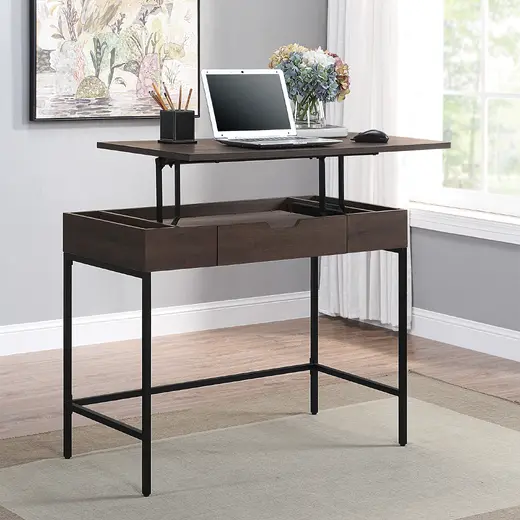
Limited space can make it difficult to create separate areas for different types of work, making versatility especially valuable in a small home office. A height-adjustable desk allows the same desktop to support both seated and standing positions throughout the day. Instead of adding another work area, the existing workstation can adapt as preferences change throughout the day. A sit-stand desk setup still needs to be planned around the room. The workstation requires enough clearance to move through its height range without interfering with the environment around it. Monitor placement, cables, and nearby storage should also accommodate that movement, so the height-adjustable feature remains practical once the office is fully arranged. The location of the desk can also affect how practical height adjustment is throughout the day. Placing the workstation where the desktop has an unobstructed path gives the user greater freedom to change positions without rearranging nearby furniture or equipment. In a smaller home office, planning for that movement from the beginning can make the adjustable feature easier to use regularly. Writer’s Choice — The Contempo Home Office Sit-Stand DeskThe Contempo Home Office Sit-Stand Desk brings height adjustment to a configuration designed for the home office. Its adjustable desktop allows the workstation to transition between seated and standing positions while keeping both functions within the same desk area. For a smaller office, that versatility can help the available workspace support different positions without requiring a second setup. 4. Choose a Desk That Belongs in the Room
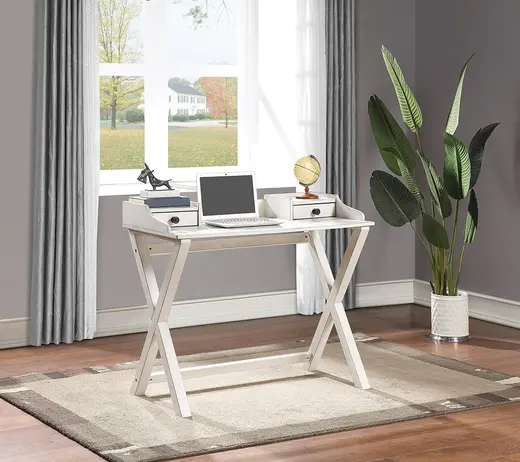
A home office is still part of the home, and that becomes particularly noticeable when the workspace shares a bedroom, living area, or other multipurpose room. In these settings, the desk does more than provide a place to work. Its shape, finish, and overall design can influence how naturally the workspace fits with the furniture and decor already surrounding it. Style should not come at the expense of function, especially when space is limited. The desk still needs an appropriate work surface and enough room for the equipment used throughout the day. Once those practical requirements are established, choosing a design that complements the room can help the office feel intentional rather than a desk haphazardly thrown in the corner of a room. Finish and material choices can further influence how the workstation relates to its surroundings. A desk that coordinates with nearby furniture can establish a dedicated work area without appearing disconnected from the rest of the room. This can be particularly valuable when the home office remains visible outside working hours. Writer’s Choice — The Barton Farmhouse DeskThe Barton Farmhouse pairs a dedicated worktop with a furniture-inspired design that can complement residential surroundings. Its farmhouse styling makes it an option for someone who wants the desk to contribute to the character of the room while still functioning as an everyday workstation. When the home office is visible in family spaces, this balance can make the workspace feel like a more natural part of the home. 5. Take Advantage of a Corner
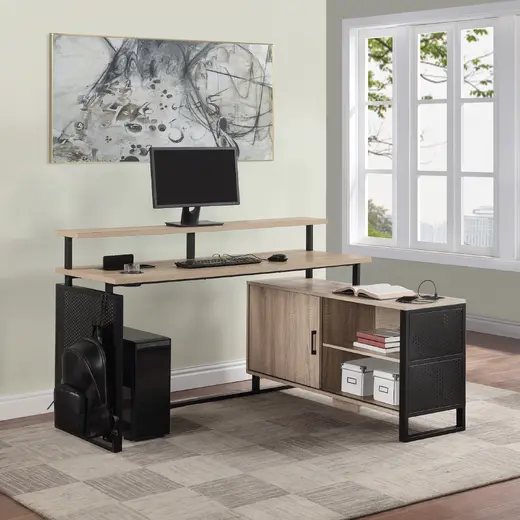
Corners can provide useful workspace in a small home office. An L-shaped configuration uses two adjoining walls or sides of the workspace, creating separate surface areas for a computer, paperwork, or other equipment. This can be especially useful when a traditional rectangular desk does not offer enough surface area for the way the office needs to function. The dimensions of both sides still need careful consideration. A compact L-shaped desk can make efficient use of an available corner, but a layout that is too large can quickly dominate a smaller room. Storage can also be incorporated into some designs, such as a small L-shaped desk with drawers, allowing the corner to accommodate both workspace and storage within the same general area. Corner placement can also preserve more of the center of the room for movement and other furniture. Instead of extending a workstation farther into the available floor space, an appropriately sized L-shaped desk can concentrate much of the work area along the perimeter. This makes accurate measurements especially important when deciding whether a corner configuration is suitable for a smaller office. Writer’s Choice — The Ace L-Shaped Desk with Monitor ShelfThe Ace L-Shaped Desk with Monitor Shelf uses a corner layout to create additional working area while keeping equipment organized. The raised monitor shelf creates a dedicated location for a display without requiring another piece of furniture, leaving the main surfaces available for everyday tasks. For a home office with an open corner, this approach offers a way to gain additional working area without defaulting to a conventional straight desk. 6. Consider a Compact Sit-Stand Desk
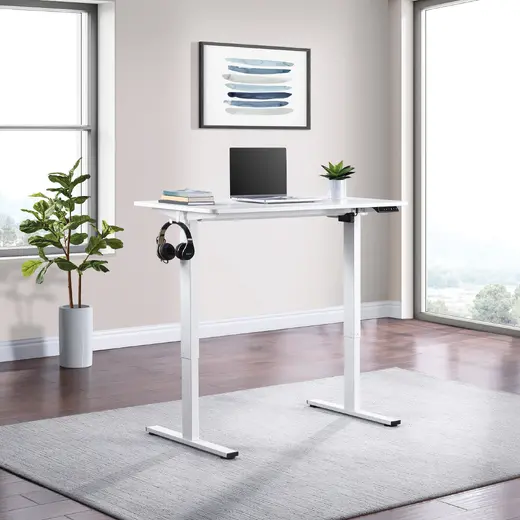
Height-adjustable desks come in a variety of sizes, making it possible to add sit-stand functionality to a home office without committing to an oversized workstation. In a smaller home office, the dimensions of the work surface can be just as important as the adjustment mechanism itself. A more compact model can accommodate essential equipment while preserving valuable space elsewhere in the office. Choosing the appropriate size starts with the available space and what the workstation needs to accommodate. A laptop-based setup may require considerably less surface area than a workstation with multiple monitors and other equipment. Matching the desktop to those requirements can prevent the desk from occupying more of the room than necessary while still providing the benefits of height adjustment. The surrounding layout should receive the same consideration as the dimensions of the desktop. A compact sit-stand desk still needs enough clearance for the surface to travel through its adjustment range, along with room for cables and equipment to move safely with it. Accounting for those requirements can help preserve the advantages of a smaller footprint without limiting the desk's functionality. Writer’s Choice — The Primo Home Office Sit-Stand DeskThe Primo Home Office Sit-Stand Desk provides another approach to incorporating height adjustment into a home workspace. Its streamlined design makes it worth considering when the goal is to create a sit-stand workstation without introducing more desk than the room or the user's equipment requires. For a smaller office, selecting the right amount of desk space can be just as important as deciding which features the desk should have. 7. Keep It Simple With a Writing Desk
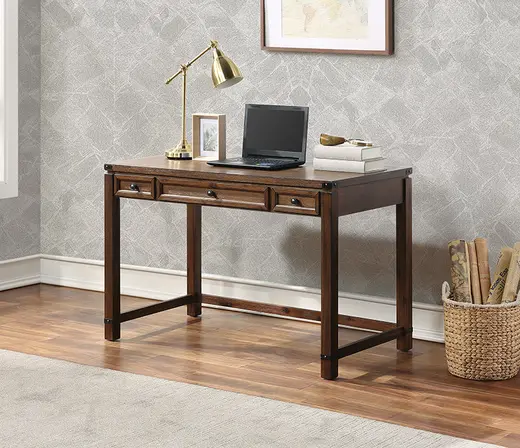
Not every home office requires a large work surface or extensive built-in features. For someone whose daily setup consists primarily of a laptop and a few essential accessories, a writing desk can create a functional workspace without taking up room for features that may rarely be used. This makes the desk itself easier to incorporate into bedrooms, living areas, and other places where the office shares its surroundings with another purpose. A simpler desk can also offer more flexibility when arranging the room. With fewer storage components or extensions to accommodate, there may be more freedom to position the workstation along a wall, near a window, or in another available area. When considering a desk for small spaces, the goal is not necessarily to find the smallest model available, but one with enough surface area for the work being performed without adding unnecessary bulk. Writing desks can also make it easier to maintain separation between the workspace and the rest of the room. Their simpler configurations can establish a recognizable place for work without requiring the visual or physical footprint of a larger workstation. This can be useful when the home office needs to coexist with another everyday use of the room. Writer’s Choice — The Baton Rouge Writing DeskThe Baton Rouge Writing Desk demonstrates how a straightforward design can provide a dedicated place to work without introducing features that may not be necessary for every home office. Its writing-desk format keeps the focus on the worktop itself, making it an option for a streamlined setup where simplicity and efficient use of the room are priorities. 8. Consider the Visual Weight of the Desk
The physical dimensions of a desk are not the only factor that affects how it fits into a smaller home office. Two desks with similar measurements can have a very different visual presence depending on their construction. Full frames with thick panels and large storage systems can make a desk appear heavier, while slimmer profiles and more open designs allow more of the surrounding room to remain visible. A lighter visual profile can be particularly useful when the home office is part of a bedroom or shared living area. A desk with an open base and less visual bulk can establish a dedicated workstation without becoming the dominant feature in the room. The practical requirements still come first, but considering visual weight alongside dimensions can help create a workspace that feels less crowded. Color and finish can contribute to that visual effect as well. Lighter finishes, slender components, and open space beneath the work surface can reduce the visual presence of a desk, while darker or more substantial designs may create a stronger focal point. Considering these characteristics alongside the actual dimensions can help determine how prominent the workstation will appear once it is in the room. Writer’s Choice — The Flavio Mid-Century Writing DeskThe Flavio Mid-Century Writing Desk brings a profile to the home office that is more open due to its streamlined design. This appearance makes it a useful example of how the structure of a desk can influence the way a workstation relates to its surroundings. For a smaller room, choosing furniture such as this can help the office maintain an open appearance while still providing a dedicated place to work. 9. Keep Everyday Items Within Reach
Limited desktop area can disappear quickly when paperwork, office supplies, charging accessories, and other frequently used items have nowhere else to go. Attached drawers keep workday essentials organized and close at hand. This can be particularly useful when there are few other places to store work-related materials. The key is deciding what needs to remain within reach during the workday. Frequently used supplies can occupy the most accessible drawers, while items needed less often can be stored elsewhere. Organizing the desk around everyday routines helps prevent the worktop from becoming permanent storage and allows the available desktop to remain useful. Keeping storage close to the work surface can also reduce the need to add organizers or other furniture around the desk. When frequently used materials already have designated locations within the workstation, more of the surrounding space can remain available for movement and other office needs. This can make integrated storage particularly useful when the room offers few additional places for work-related items. Writer’s Choice — The Heartland Office Source Home Office Desk with DrawersThe Heartland Office Source Home Office Desk with Drawers combines a dedicated work area with storage built directly into the workstation. The built-in drawers move workday essentials off the desktop while keeping them within easy reach. For a home office where organization is a priority, this approach keeps storage close to where those items are most likely to be used. 10. Use More of the Room When It Makes Sense
Making the most of a small home office does not always mean choosing the smallest desk possible. Some dedicated home offices may have enough usable square footage to support a larger workstation. When that space is available, using more of it can provide additional desktop and storage without compromising how comfortably the office functions. An L-shaped desk can be especially useful for someone who needs more than a standard computer setup. The additional surface can create separation between computer work, paperwork, and other daily tasks, while built-in drawers can keep storage incorporated into the workstation. Before choosing a larger desk, measurements should account for both sides of the L-shape as well as chair movement and access around the desk. A larger workstation should still leave enough open space for the office to remain comfortable to use. The additional surface and storage are most valuable when they improve the way the room functions rather than simply filling available square footage. Planning the complete footprint before choosing the desk can help determine whether an L-shaped configuration makes productive use of the additional room. Writer’s Choice — The Heartland Office Source L-Shaped Desk with DrawersThe Heartland Office Source L-Shaped Desk with Drawers provides a larger workstation for a dedicated home office. The extended desktop accommodates equipment and everyday tasks, while the drawers integrate storage into the desk. This is a solid choice for someone with a dedicated office or a spare room that can be committed primarily to work. Choosing the right desk for a small home office starts with understanding how the room needs to function. A compact desk may be the right fit for one workspace, while another may benefit from integrated storage, height adjustment, a writing desk, or an L-shaped configuration. The goal is not simply to use less room, but to make better use of what is available. Careful measurements and a clear understanding of everyday work requirements can help narrow those choices. As I have learned from building my own home office, creating the right workspace does not have to happen all at once, but choosing the right desk can establish a strong foundation for everything that follows. When the desk offers the necessary work surface, storage, and functionality without overwhelming its surroundings, even a smaller home office can become a comfortable and productive place to work.
More From This Author |