Office Accessories to Maximize EfficiencyOffice Accessories to Maximize Efficiency
When office workers think of an efficient workstation, major furniture pieces like desks, chairs, and storage cabinets often come to mind. However, smaller additions can have a significant impact on how efficiently a workspace functions. Issues such as cluttered work surfaces, poorly organized paperwork, inadequate lighting, limited storage, and supplies that are difficult to move can create unnecessary friction throughout the workday. Addressing these issues with the right office accessories can make existing workspaces easier to use without requiring a major redesign or furniture investment. Office accessories can help organize the desktop and address practical needs throughout the workstation. Desktop organizers, monitor arms, task lighting, mobile storage, wastebaskets, and utility carts each serve different purposes within an organized work area. The most useful products are not necessarily the most complex or expensive. Their value comes from solving specific problems that affect organization, accessibility, comfort, and workflow. Rather than treating office accessories as a collection of miscellaneous add-ons, businesses can evaluate them according to the workplace challenges they address. Choosing targeted accessories for organization, ergonomics, storage, lighting, and mobility can help employees make better use of the furniture and space they already have. Small, practical office accessories can improve workplace efficiency by helping employees organize materials, access everyday items, and use existing workspaces more effectively. Organize Your Desktop
Usable desk space can quickly be reduced by clutter, making everyday materials more difficult to locate and disrupting organization. Desk organizers provide dedicated spaces for frequently used items such as pens, notebooks, and small supplies, keeping them accessible without allowing them to spread across the work surface. Paper organizers and desktop trays can serve a similar purpose for documents that need to remain within reach. Separating everyday supplies from active paperwork helps preserve more of the desk for the work being performed. Smaller accessories can also have a noticeable impact on desktop organization. Items such as file organizers and phone stands give important materials and devices consistent locations within the workstation. For more ideas, see our guide to desk accessories for any office. The goal of desk organization is not simply to create a cleaner appearance, but to give commonly used items predictable places so employees spend less time searching for supplies and more time using the workspace effectively. Improve Ergonomics
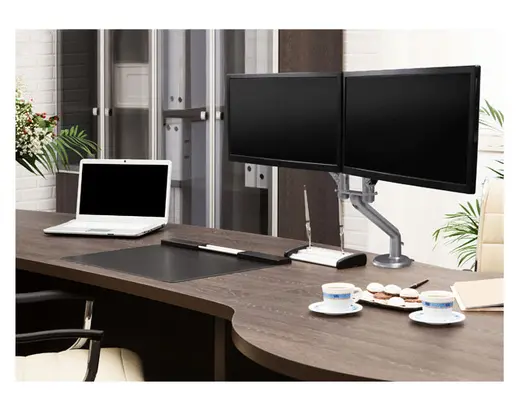
A workstation can include the right desk and chair while still feeling awkward if equipment is not positioned appropriately for the person using it. Monitor stands and risers can elevate computer displays to create a more comfortable viewing angle while also opening space beneath the screen. Monitor arms offer greater flexibility by allowing users to adjust screen position while freeing more of the desktop for other tasks. These accessories make it easier to fine-tune an existing workstation without replacing its primary furniture. Foot rests provide another simple way to improve how an existing workstation is used. They give employees a designated surface for supporting their feet when desk and chair heights do not provide an ideal resting position. Accessories like these do not replace proper furniture selection, but they can help employees adapt an existing workspace to better accommodate individual preferences and daily tasks. Control Paper and Mail
Paperwork becomes harder to manage when active documents, incoming mail, reference materials, and items awaiting action are kept in the same place. Paper organizers and file organizers can separate documents by purpose, priority, or department, making materials easier to locate when they are needed. File boxes provide another option for keeping less frequently used documents nearby without allowing them to accumulate across the desktop. Separating active materials from stored documents helps create a clearer workflow for handling paperwork throughout the day. Shared offices may also benefit from mail sorters and literature organizers. Mail sorters can provide designated locations for incoming correspondence, while literature organizers keep forms, brochures, manuals, and other printed materials accessible to employees who use them regularly. Creating defined locations for different types of paperwork helps establish a more consistent document flow and reduces the time spent searching through unsorted materials. Add Accessible Storage
Not every pen or document needs to remain on the desktop, but frequently used materials should still be easy to reach. Rolling file carts, compact storage carts, and mobile cabinets can keep files, supplies, and equipment near the workstation without permanently occupying valuable desk space. These products are especially useful when employees need access to more materials than a standard desk drawer can accommodate. Keeping additional storage close to the workstation reduces the need to leave the area repeatedly for commonly used supplies. Mobile storage provides flexible support within an evolving office space. As workplace needs change, file boxes and rolling carts can be moved between departments, work areas, or temporary project spaces. These storage solutions can support short-term projects and then be relocated or removed as the project scales down. The goal is not simply to add more storage, but to make frequently used materials easier to access while keeping the primary work surface clear. Improve Lighting
General office lighting does not always provide enough illumination for every individual work surface. Desk lamps and task lights can add focused light for reading, writing, reviewing documents, or completing detailed work. Adjustable designs allow employees to direct light toward the task instead of relying entirely on overhead fixtures. This can be especially helpful when employees perform different types of work at the same desk throughout the day. Focused lighting can be especially useful in workstations located farther from windows or in areas where overhead lighting creates uneven coverage. Adding a small lamp does not require changes to the broader office lighting system, making it a simple way to address a localized need. The goal is to provide employees with better control over the light available at their individual work areas. A targeted lighting upgrade can improve the usability of an existing workstation without requiring changes to the surrounding furniture. Keep Shared Spaces Organized
Shared office areas can become cluttered quickly when employees and visitors do not have designated areas for personal items, printed materials, or waste. Coat hooks and racks provide convenient locations for jackets and coats, helping keep chairs and work surfaces clear. Wastebaskets and trash cans serve a similar purpose by placing disposal points where they are easy to access. Providing these basic accessories helps prevent shared surfaces from becoming catch-all areas for personal belongings and everyday debris. Magazine stands can help maintain order in waiting rooms, breakrooms, and other shared spaces where printed materials are frequently left. These accessories may be simple, but they create consistent places for everyday items and make common areas easier to maintain throughout the workday. Keeping shared materials in designated locations also makes it easier for employees to return them after use. Small organizational accessories can support a cleaner, more functional environment without requiring additional furniture. Make Supplies Easier to Move
Some office supplies and equipment are used in more than one location throughout the workday. Utility carts and storage carts can help move files, supplies, presentation materials, equipment, or refreshments between work areas without requiring employees to carry several loose items at once. Rolling file carts can provide similar support when documents need to travel between departments or temporary project spaces. Keeping related materials together during transport can make these transitions more organized and easier to manage. Mobile carts are especially useful in offices where rooms serve multiple purposes or supplies are shared between teams. They can reduce repeated trips by allowing several items to move together from one work area to another. Small mobility solutions like these can improve workflow by making everyday materials easier to move where they are needed. They also allow shared supplies to remain organized while still being accessible to multiple work areas. Office improvements do not always require replacing major furniture or redesigning an entire workspace. Small accessories can solve specific problems involving organization, accessibility, lighting, storage, and mobility while helping employees use existing furniture more effectively. Selecting products according to the challenges they address allows businesses to make targeted improvements without creating unnecessary expense. The right combination of practical office accessories can help create a work environment that is easier to organize, maintain, and use throughout the day.
More From This Author |