Rectangular vs. Boat-Shaped Conference TablesRectangular vs. Boat-Shaped Conference Tables
Rectangular and boat-shaped conference tables serve different purposes, balancing practical versatility with the distinctive presence a table can bring to the meeting room. Conference rooms provide a dedicated place for teams to exchange ideas, review information, make decisions, and move projects forward. While the purpose of the room may remain the same, the shape of the conference table changes more than its appearance. Different profiles can influence the impression of the space and, more importantly, how people interact around the table. The rectangular conference table has long been a familiar choice for professional meeting spaces. Much of its appeal comes down to straightforward geometry, a practical layout, adaptability, and broad suitability across conference and meeting rooms. Its long, straight profile provides a familiar working surface that can accommodate a range of room sizes, seating arrangements, and meeting requirements. On the other hand, the boat-shaped conference table is visually distinct from the straight profile of a rectangular design. It features a deliberate shape, widening through the center and narrowing toward the ends. While boat-shaped conference tables can fit naturally within many conference rooms, their more distinctive profile can make them particularly well suited to executive boardrooms and other meeting spaces where the table is intended to have a stronger visual presence. Deciding between these two conference table profiles requires looking beyond a preferred silhouette. Room dimensions, seating arrangements, sightlines, presentation needs, and the role the conference room plays within the workplace can all influence which shape makes the most sense for the space. Why Conference Table Shape Matters The conference table shouldn’t be viewed simply as a piece of office furniture that can handle a certain seating capacity. Two designs can accommodate the same number of participants while distributing the tabletop surface differently. A rectangular table maintains an essentially consistent width, while a boat-shaped table expands through the center and narrows toward the ends. That difference in geometry influences how the table functions within the conference room. Seating layout can also change perspective within the room. Along the straight sides of a rectangular table, participants are positioned in a more uniform line, which can place people farther down the table behind others seated along the same side. That arrangement may require participants to look around one another during conversations or when viewing a shared display. The curved sides of a boat-shaped table change those seating angles, helping open sightlines between participants and toward presentation areas. Table shape also influences the visual character of the meeting room. The straightforward profile of a rectangular table provides a familiar, adaptable appearance that works across a wide range of professional spaces. A boat-shaped profile is more distinctive, introducing curves and a broader center that give the table a stronger visual presence. Those differences can become particularly relevant when comparing the practical requirements of a general meeting room with the more formal presentation often associated with executive offices and boardrooms. The Practical Advantages of Rectangular Conference Tables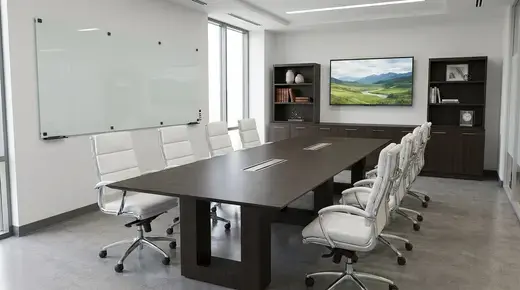 Rectangular conference tables maintain a consistent width across the entire table. This straightforward approach creates a predictable work surface and seating arrangement. Participants have space for the tools they bring to the meeting, including laptops, notebooks, presentation materials, and documents. The familiar layout provides a strong foundation for an organized meeting. The rectangular profile fits naturally within many meeting spaces. The straight lines of the table correspond with common architectural elements throughout the office, including walls, flooring, storage, and other furnishings. That straightforward geometry makes the table easy to incorporate into conventional room layouts, providing an adaptable base of operations for different types of meetings. That versatility makes the rectangular profile a practical choice for conference rooms expected to serve multiple purposes. A single space may host team meetings, client presentations, planning sessions, interviews, and video conferences throughout the week. When the priority is a familiar layout that can accommodate those changing requirements without defining the room around a more specialized table shape, the rectangular conference table remains a dependable option. What Sets Boat-Shaped Conference Tables Apart The meeting surface of the boat-shaped conference table takes a different approach entirely. Instead of maintaining a consistent width, the tabletop expands through the center before narrowing toward each end. The curved sides create a more deliberate profile while changing the relationship between participants seated around the table. This geometric change can become particularly noticeable during larger meetings. The curvature of the sides changes viewing angles along the length of the table, helping open sightlines between participants and toward shared presentation areas. For meetings built around discussion, displays, or information presented on a video display, those differences can provide clearer sightlines than a traditional rectangular seating arrangement. Function is only part of the distinction. The wider center and curved profile give a boat-shaped table a stronger visual presence than a conventional rectangular design. That more detailed silhouette can be especially appropriate for executive meeting spaces and boardrooms, where the conference table often serves as one of the defining pieces of furniture in the room. Boat-shaped tables can work across many professional meeting environments, but their combination of function and presentation makes them particularly compelling when the table is intended to have a more prominent role in the overall design. Choosing the Right Shape for Your Meeting Room Choosing between rectangular and boat-shaped tables should begin with the dimensions and layout of the conference room. The table needs enough surrounding clearance for conference chairs, circulation, and access to doors, storage, presentation equipment, and other furnishings. Rather than choosing by shape alone, compare the actual dimensions of the table with the usable space available in the room. For additional planning considerations, our guide to choosing the right conference table covers the broader factors involved in selecting a table for your meeting space. Madison Liquidators recommends 36 to 48 inches of clearance between the conference table and surrounding walls. Room function should be considered alongside its dimensions. A conference space that regularly shifts between interviews, planning sessions, video calls, and team meetings may benefit from the straightforward versatility of a rectangular table. In a room frequently used for larger discussions or presentations, the curved profile and altered sightlines of a boat-shaped table may carry greater practical value. The role the room plays within the workplace can ultimately separate two otherwise suitable choices. Rectangular tables provide a familiar, adaptable solution when straightforward functionality is the focus. Boat-shaped conference tables bring those same fundamental meeting functions into a more distinctive form, making them particularly compelling when presentation and visual presence are greater priorities. For many dedicated conference rooms, a boat-shaped table can offer practical advantages by opening sightlines between participants and toward shared displays, while rectangular tables remain a strong choice when versatility and straightforward room planning take priority. Madison Liquidators offers conference tables for a wide range of professional meeting environments. Whether your space calls for the practical versatility of a rectangular design or the distinctive presence of a boat-shaped table, explore the collection to find the size, style, and configuration that fits the way your meeting room works.
More From This Author |