Designing Productive Workspaces for Hybrid TeamsDesigning Productive Workspaces for Hybrid Teams
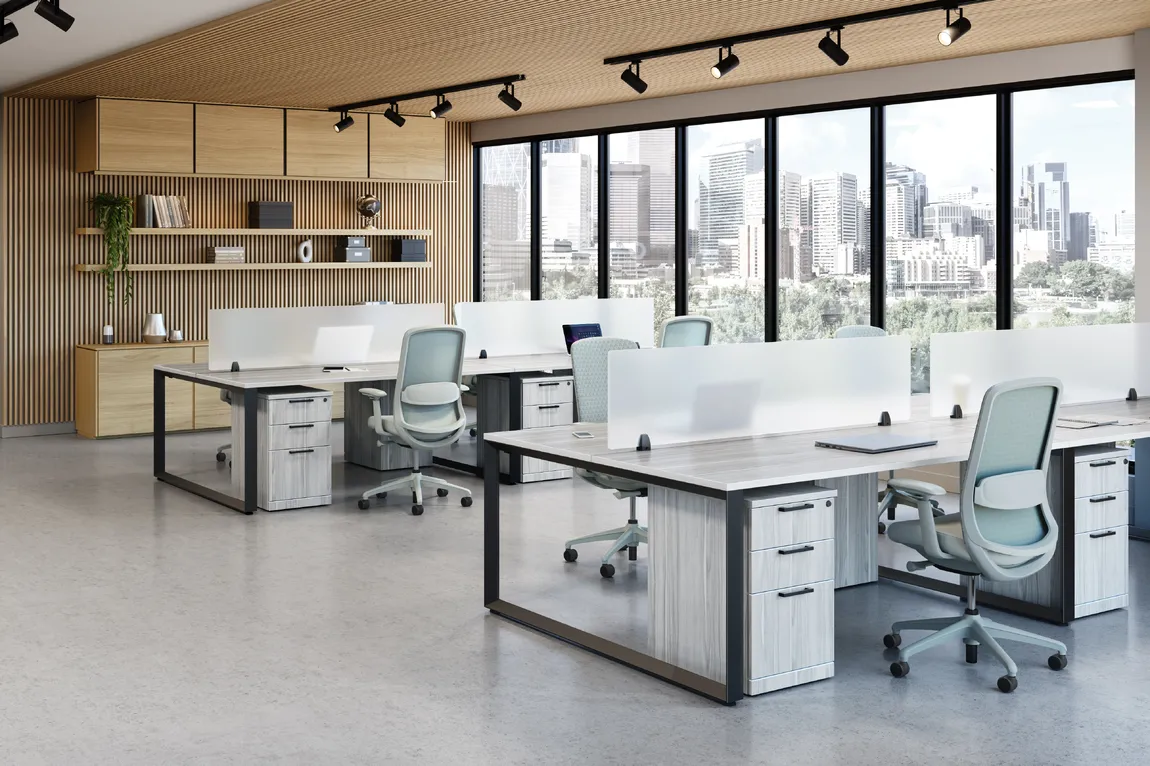
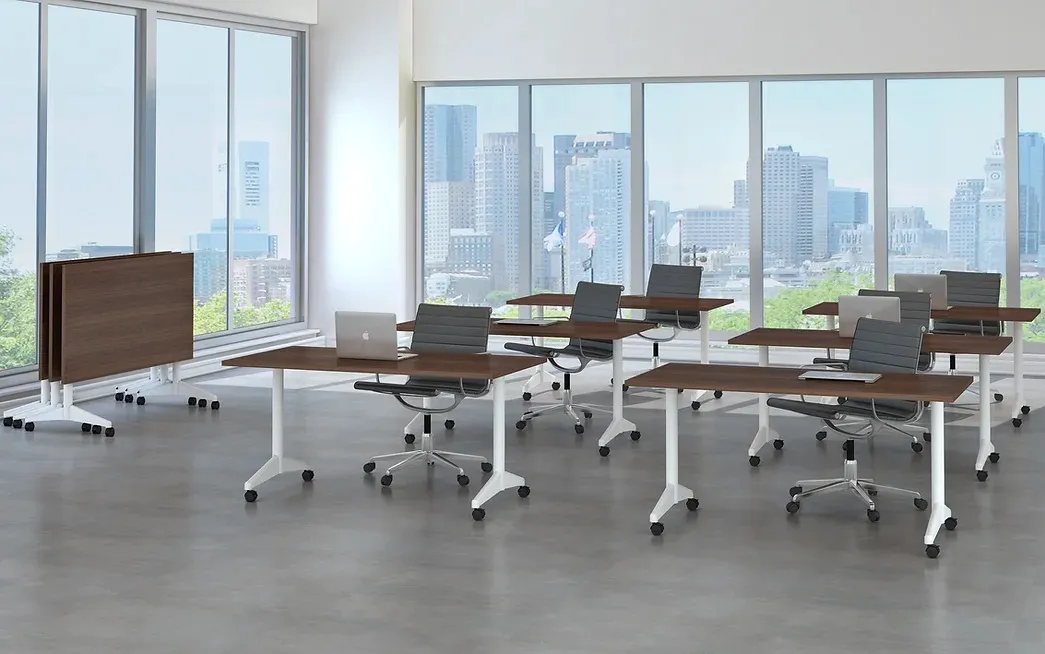
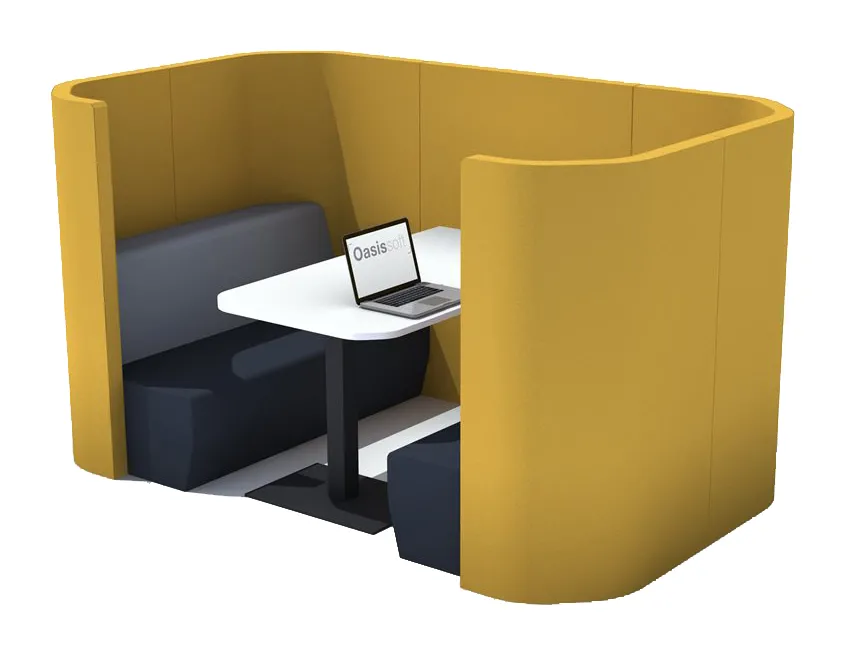
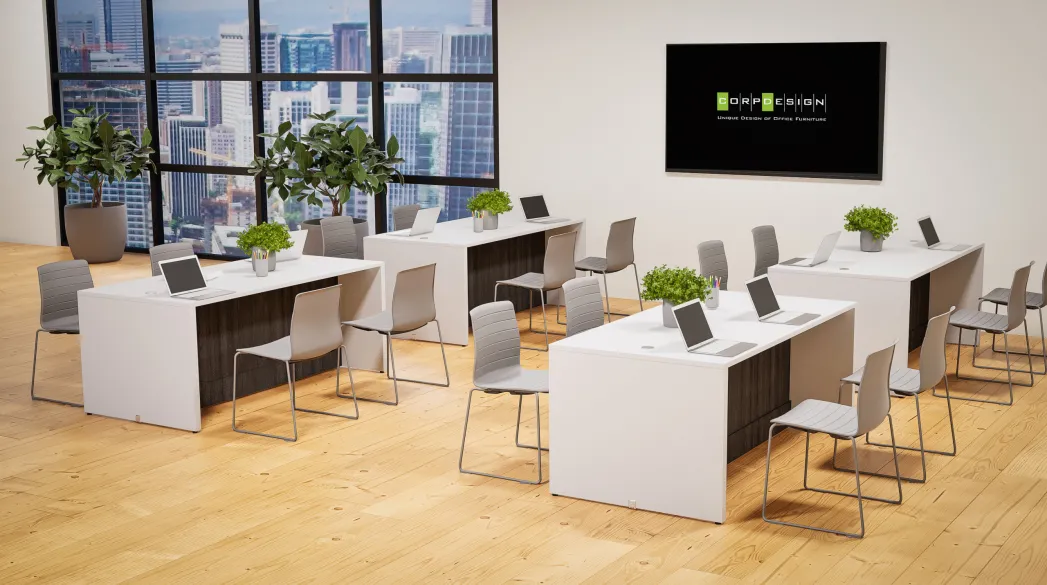
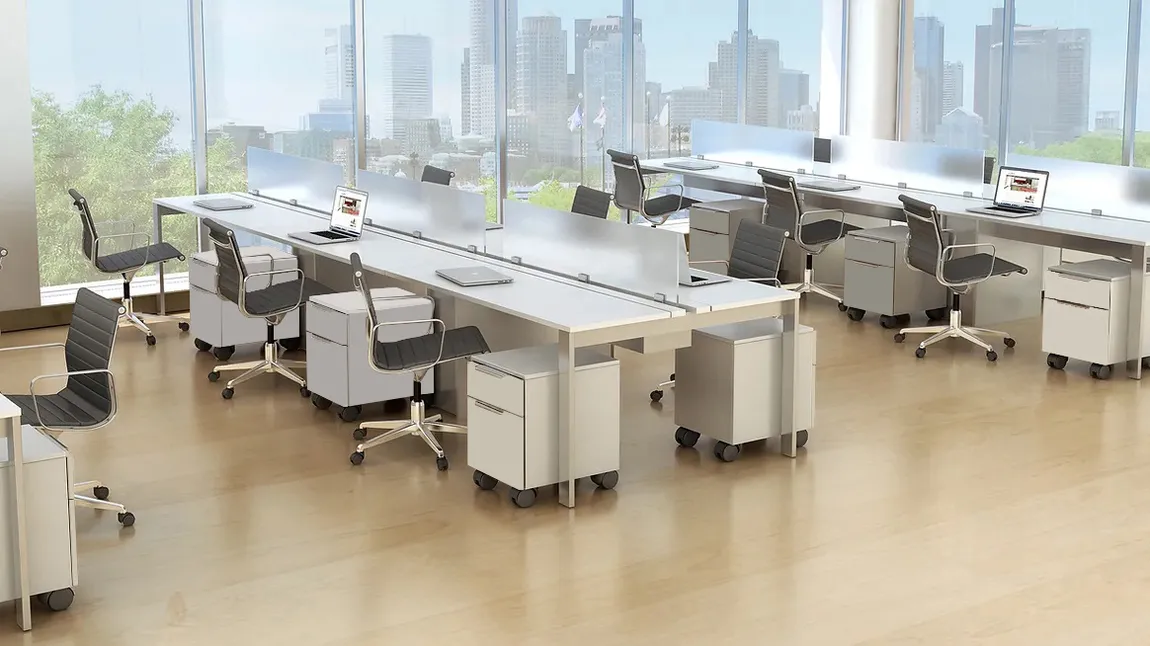
Hybrid work is no longer a transitional policy; it is a structural component of workforce strategy. The traditional one-to-one desk allocation model no longer aligns with occupancy realities. Fluctuating attendance patterns and evolving work expectations have permanently redefined the purpose of the office. Modern hybrid office design must respond to variable utilization rather than fixed headcount. Organizations are now confronting measurable planning challenges as hybrid schedules mature. Peak attendance days strain resources, while low-occupancy days expose underused square footage. Static layouts magnify these inefficiencies, limiting responsiveness when demand shifts. Without deliberate spatial planning, environments fail to support focused work, collaboration, or coordinated team presence. Effective hybrid planning begins with a shift in framework: from counting desks to defining function. The critical question is no longer “How many seats are required?” but “What activities must this space enable?” This function-first approach allows organizations to allocate square footage intentionally—integrating shared workstations, collaboration zones, touchdown areas, and private focus spaces in proportion to actual behavioral patterns. Hybrid workplaces must operate as dynamic systems rather than fixed floor plans. Furniture selection, layout configuration, and zone planning directly influence productivity, spatial efficiency, and long-term capital performance. Strategic planning reduces reconfiguration costs, limits waste, and ensures the office remains aligned with workforce behavior. In hybrid environments, adaptability is not an amenity—it is foundational. Hybrid Work Redefines Space Utilization Hybrid models introduce a distinct set of pressures compared to traditional office structures. Attendance volatility directly impacts how space performs. On peak days, shared resources are strained—workstations become scarce, meeting rooms are overbooked, and collaboration areas reach capacity. On lighter days, the same environment can feel underutilized and inefficient. Effective hybrid strategies must anticipate predictable density patterns rather than reacting to them. Poorly calibrated layouts place unnecessary stress on infrastructure. When conference rooms become bottlenecks and informal collaboration areas are insufficient, workflow slows. At the same time, maintaining a high number of permanently assigned desks often results in large sections of the office sitting idle for much of the week. Static allocations fail to reflect dynamic attendance patterns, locking square footage into outdated assumptions. The core requirement is responsiveness. The same physical footprint must perform differently from day to day. Fixed workstation grids consume space without offering reallocation capacity, limiting the office’s ability to absorb change. Fully embracing hybrid work means shifting planning metrics beyond headcount alone. Utilization ratios, peak density modeling, and circulation flow become primary performance indicators. When space is evaluated through this lens, organizations design offices that adjust with precision rather than disruption. Designing Shared Workstations That Scale In a hybrid office design, assigned seating often undermines efficiency. Strategic capacity planning requires workstation zones that adapt to attendance variability rather than remain tied to individuals. Not every employee needs a dedicated desk, and ownership models frequently restrict access when occupancy fluctuates. In hybrid environments, seat planning evolves into capacity management—aligning space allocation with actual demand. Bench systems and shared desk clusters provide a scalable foundation for this approach. Open workstation configurations without permanent assignments support reservation-based seating and structured hot-desking models while maintaining consistency. Modular layouts allow organizations to expand or contract seating density without overcommitting square footage. Because systems are repeatable and adaptable, reconfiguration becomes incremental rather than disruptive. The objective is stability: minimizing idle real estate on low-attendance days while preventing bottlenecks during peak periods. When implemented thoughtfully, shared workstations optimize capital deployment, simplify expansion, and allow the office to operate as a flexible asset rather than a rigid floor plan. Touchdown Spaces for Short-Duration Work Not every employee entering a hybrid office requires a full workstation. Many visits are brief—checking messages, preparing for meetings, handling quick deliverables, or transitioning between collaborative sessions. Designing for these short-duration activities prevents full desks from being unnecessarily occupied and improves overall space utilization efficiency. Touchdown spaces are intentionally minimal and strategically placed. Compact work surfaces, counter-height tables, soft seating with integrated power, and standing-height counters positioned along circulation paths provide immediate usability without encouraging long-term occupancy. These zones are designed around turnover velocity and short time-in-seat durations, allowing employees to complete focused tasks without disrupting primary workstation allocation. Operationally, touchdown areas function as capacity stabilizers. On peak days, they absorb overflow demand without forcing reconfiguration. On lighter days, they remain unobtrusive and flexible. When positioned near collaboration hubs and meeting rooms, they enhance functional density while preserving flow. Aligning furniture layout with actual movement patterns ensures workstation utilization remains balanced rather than distorted by short-term occupancy behavior. Private Focus Areas in an Open Hybrid Environment Hybrid models do not eliminate private space requirements. Certain roles demand consistent privacy, and high-concentration work requires insulation from open collaboration zones. Private focus areas ensure that cognitively intensive tasks are protected from ambient distraction. In this context, success is measured by task alignment—not seat count. Effective zoning includes enclosed offices for leadership or role-specific needs, reservable quiet rooms, and adaptable solutions such as acoustic pods or privacy booths. These options provide separation without permanently committing square footage to rigid layouts. In a hybrid environment, universal ownership is unnecessary—but universal access to privacy is essential. Acoustic and visual control are operational considerations. Sound bleed, circulation patterns, and open sightlines increase cognitive load and reduce sustained focus. Flooring materials, soft finishes, partitions, and spatial buffering all influence performance. Quiet zones must be intentionally positioned away from high-energy collaboration areas. Planning also requires behavioral alignment. Reservation systems, time-blocking protocols, and clearly defined usage expectations prevent private areas from becoming informally claimed. Hybrid environments perform best when spatial intent and workplace policy reinforce one another. Collaboration Zones That Earn Their Square Footage In a hybrid office, the collaboration space must justify its footprint. Employees often commute into the office for interaction, coordination, and decision-making—not solitary work. Collaboration zones, therefore, require intentional design aligned with defined outcomes. Collaboration varies in intensity. Formal meeting rooms with integrated technology support structured sessions. Informal huddle areas allow rapid alignment without occupying enclosed rooms. Lounge groupings, project tables, and standing-height surfaces serve different engagement levels and time horizons. The objective is diversity of format, not uniformity. Adaptability remains critical. Modular tables, mobile seating, and reconfigurable layouts allow collaboration zones to expand or contract with attendance patterns. On peak days, these areas must accommodate density without disorder. On lighter days, they must remain purposeful rather than oversized. Technology integration further defines performance. Hybrid collaboration frequently includes remote participants, requiring thoughtful placement of screens, cameras, power access, and acoustical support. Layout should enable equitable engagement for both in-person and remote contributors. Collaboration zones that are poorly integrated create friction rather than connection. In hybrid offices, collaboration must be engineered—not improvised. Layout Flexibility as a Long-Term Hybrid Strategy Hybrid models will continue to evolve, and office layouts must evolve with them. Policy adjustments, team restructuring, growth, and contraction are inevitable. Real estate commitments, however, often extend beyond workplace trends. Planning must account for change as a constant rather than an exception. Permanent workstation grids limit adaptability. Hard-built partitions increase the cost of revision. Fixed power and data placements embed inefficiencies. Oversized conference rooms that cannot be subdivided frequently become underutilized. When layouts are treated as static, change becomes expensive. Flexibility, properly defined, means engineered adaptability. Modular workstation clusters, reconfigurable benching systems, movable collaboration tables, demountable partitions, and mobile storage enable density and function shifts without structural overhaul. These are not temporary solutions—they are structural safeguards. Adaptable environments protect capital investment. When infrastructure supports expansion and contraction, reconfiguration costs decline and relocation scenarios simplify. Organizations preserve investment by adjusting what they own rather than replacing it. In this context, furniture planning directly supports business resilience. The Office as a Strategic Asset in a Hybrid EraHybrid work is a structural shift in organizational operation. The office is no longer a static container for desks but a performance environment that must support collaboration, focus, culture, and efficiency—often within the same footprint. Layout decisions now carry measurable impact. Misaligned spaces create friction and underused square footage, while well-calibrated environments support clarity, productivity, and coordination. Space is no longer evaluated by occupancy alone, but by performance. Flexibility reduces exposure to risk. When layouts are designed for adaptability, organizations respond to policy changes, growth cycles, or workforce shifts without starting over. Modular infrastructure and intentional zoning protect capital and stabilize long-term planning. Designing productive hybrid workplaces requires alignment between policy, people, and physical space. At Madison Liquidators, we approach hybrid workspace planning as a strategic process—helping organizations evaluate space performance, anticipate change, and build environments that remain effective as work continues to evolve. In hybrid environments, space strategy is no longer optional—it is competitive advantage.
More From This Author |